

Knife Care & Best Practices: How to Prevent Pitting Before It Starts
In our last post, [The Unseen Enemy], we talked about how water—specifically the chemistry of water and steel—causes those permanent, unsightly pits on your favorite knives. Now that you know the cause, let’s talk about the cure.
Prevention is everything. Once pitting creates deep craters on the side of a blade, they are there to stay. However, with a few simple adjustments to your cleaning routine, you can keep your steel smooth, healthy, and high-performing for a lifetime.
Here is the Local Root guide to keeping the "unseen enemy" at bay.
Rule #1: The Dishwasher is Off Limits
If there is one golden rule of knife care, this is it. We often see the most severe corrosion on knives that have taken a spin in the dishwasher. It is effectively a torture chamber for high-quality steel:
The Chemistry: Dishwasher detergents are abrasive and contain harsh chemicals and salts designed to strip food. These chemicals actively break down the steel’s protective layer.
The Heat: High heat accelerates chemical reactions (rusting).
The Duration: The wash cycle leaves the steel wet, hot, and covered in chemicals for a prolonged period.
Rule #2: Skip the Drying Rack
This is the most common mistake we see. You hand wash your knife (great!), but then you place it in the rack to air dry (not so great).
Even clean tap water contains dissolved minerals and chlorides. When a water droplet sits on a blade and evaporates, it doesn't just disappear; it leaves behind a concentrated ring of these minerals. This concentration attacks the steel in a localized spot, creating a pit.
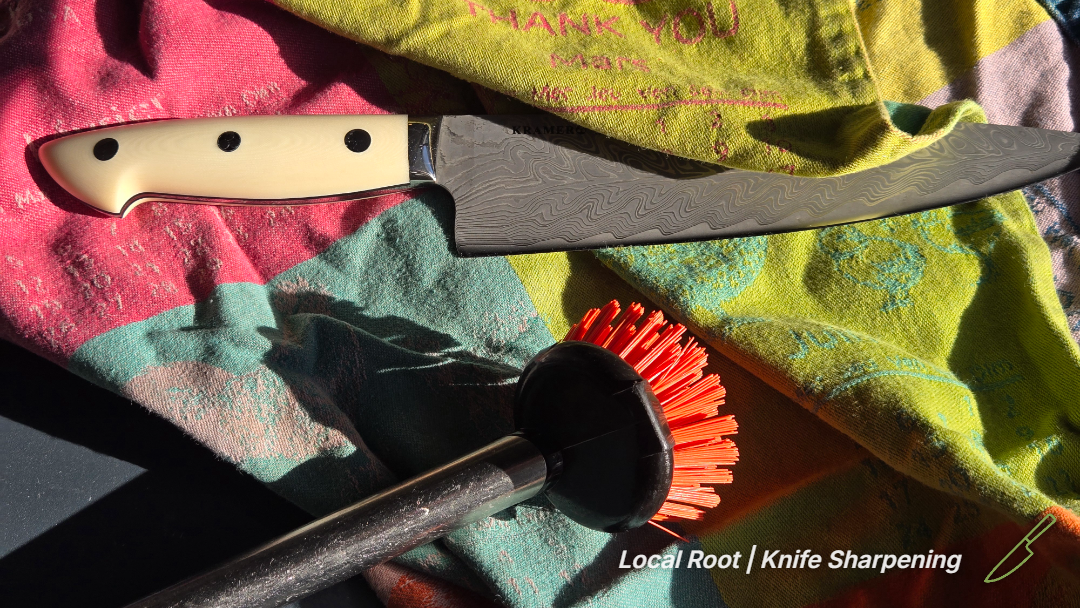
To keep that edge pristine, always wash your knife immediately after use and dry it thoroughly before storing.
The 3-Step "Anti-Pitting" Routine
To keep your knives looking their best, follow this simple routine every time you cook:
Wash Immediately: Don't let the knife sit with food residue (especially acidic foods like lemons or tomatoes) on the blade. Wash it with warm water and mild soap right after you are done chopping.
Rinse Thoroughly: Make sure all soap and food acids are gone.
Towel Dry Immediately: This is the critical step. Use a clean, dry towel to wipe the blade completely dry. Do not let it sit wet.
A Note on Carbon Steel
While all "stainless" steel can pit, high-carbon steel knives (which many of our customers love for their incredible edges) are even more sensitive. They don't just pit; they can rust aggressively. For these knives, the "Dry Immediately" rule is not just a suggestion—it’s a requirement.
The Bottom Line
Your knives work hard for you. A quick wash and an immediate towel dry is the best way to say "thank you" and ensure they stay rust-free and ready for your next meal.
Has your knife already fallen victim to pitting? While we can’t erase the scars on the side, we can often rescue the edge. [Book an appointment today] and let us check if there is good, solid steel hiding beneath the damage.